

Iran has stated that diplomatic talks with the United States are still underway, but stressed that the Strait of Hormuz will remain closed until Washington ends its naval blockade and responds to Tehran’s demands.
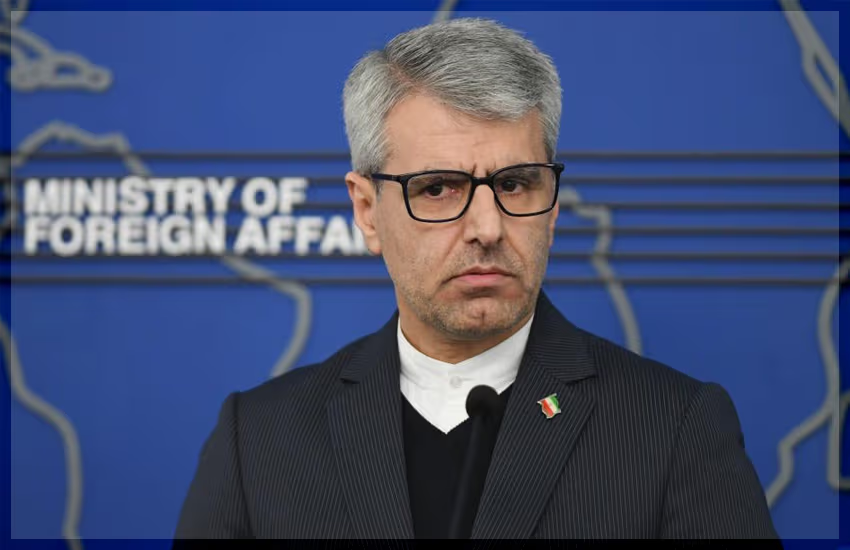
Foreign Ministry spokesperson Esmaeil Baghaei made the statement during his weekly press briefing on Monday, noting that Iran had clearly conveyed its negotiating stance to the US. He said the next move was now up to Washington, while Tehran remained ready to deal with any possible development as the conflict continues.
Baghaei described Iran’s demands as legitimate and reasonable, arguing that no comprehensive agreement could be reached and the Strait of Hormuz could neither be reopened nor secured as long as the US naval blockade remained in effect.
“Our demands have been articulated very clearly and transparently. These demands are reasonable and logical,” he said, emphasising that Iran’s legitimate conditions must be fulfilled before diplomatic negotiations can make further progress.
He cautioned the United States against expecting Iran to make commitments on its own while Washington continues to impose restrictions on Tehran.
“You cannot speak of security while maintaining a blockade against Iran, nor can you expect Iran to make unilateral commitments,” Baghaei said.
The spokesperson reiterated that fulfilling Iran’s demands was essential to restoring regional security and moving discussions towards the next phase of negotiations.
Iran’s Seven-Stage Plan Could Be Put Into Effect Within Two Days
Baghaei stated that diplomatic efforts were centred on a seven-stage proposal drafted by Iran in September, aimed at reopening the Strait of Hormuz and bringing an end to the US naval blockade.
He explained that Tehran had received Washington’s position, discussed mutual concerns and considerations with the US side, and then revised its proposal into a framework that could be put into effect within two days.
The proposed two-day timeframe is a shortened version of Iran’s initial seven-day plan. Baghaei presented the initiative as a sign of Tehran’s willingness to cooperate, while making clear that its implementation depended solely on the United States.
Iranian Foreign Minister Abbas Araghchi had also suggested that an agreement could lead to the reopening of the Strait of Hormuz within two days, instead of the seven days originally proposed.
However, US President Donald Trump had turned down Iran’s initial proposal.
Qatar Continues Mediation as Iranian Negotiators Depart Doha
Diplomatic efforts have continued through Qatar, as Iranian Deputy Foreign Minister for Legal and International Affairs Kazem Gharibabadi travelled to Doha to help facilitate the exchange of messages between Tehran and Washington.
Baghaei explained that Gharibabadi’s visit was intended to support diplomatic exchanges between Iran and Qatar, while Qatari intermediaries were working to relay messages between the two sides.
An official familiar with the negotiations said Iranian representatives had concluded their discussions with Qatari mediators and left on Sunday. The official clarified that their departure was not linked to any disagreement during the talks, adding that a draft proposal was being shared and another round of discussions remained possible.
Baghaei said negotiations were still underway and covered several highly complex matters. He acknowledged that delays had made the process more challenging, but maintained that communication between the parties was continuing.
He further confirmed that Iran had made no changes to its negotiating delegation. Parliament Speaker Mohammad Baqer Qalibaf and Foreign Minister Abbas Araghchi continue to serve as the country’s main negotiators.
According to Baghaei, the Supreme National Security Council (SNSC) was overseeing the negotiations, with specific responsibilities assigned to each official. Referring to General Mohsen Rezaei’s remarks on the talks, he described the unity among Iran’s decision-makers as unprecedented.
Iran Says Next Move Is Up to Washington
The spokesperson stated that Tehran had conveyed all the necessary details to the United States through established diplomatic channels.
“The ball is in America’s court,” he said, emphasising that Washington must now decide whether to accept Iran’s demands and pursue an agreement.
Baghaei also addressed a letter sent by US Vice President JD Vance to Mohsen Rezaei, secretary of Iran’s Supreme National Security Council. He noted that differences in the style of correspondence were common, but stressed that Tehran was more focused on Washington’s actions than the language used in its messages.
He accused the United States of weakening diplomatic efforts, claiming that Washington had repeatedly encouraged conflict, disrupted diplomatic processes and undermined initiatives that had emerged through dialogue over the past two years.
Iran Says Tensions With US Remain Unresolved
Baghaei cautioned that the conflict between Iran and the United States remained unresolved, stressing that Tehran must stay prepared to face any possible developments.
When asked about the US midterm elections taking place on Tuesday, he said Iran did not anticipate that the vote would “give birth to a new US”.
Trump has stated that the United States would refrain from carrying out new strikes against Iran ahead of the elections and described negotiations with Tehran as productive. However, he has left open the possibility of further military action.
The latest diplomatic initiatives are taking place amid growing concerns that tensions could rise again following the US midterm elections.
Baghaei Blames US and Israel for Regional Instability
During the press briefing, Baghaei held the United States and Israel responsible for being the primary sources of instability in West Asia.
He opened his remarks by commemorating Aban 13, which falls on November 3 and marks the takeover of the US Embassy in Tehran by supporters of the Imam Khomeini line. He also honoured those who lost their lives during the incident.
Baghaei identified the occupied Palestinian territories and the ongoing violence in Gaza as central factors shaping regional developments, accusing Israel and the United States of contributing to the unrest.
He stated that Israeli military operations in Lebanon and Gaza had escalated following elections in Israel. He further warned that the approaching winter season was worsening the already dire conditions faced by displaced Palestinians.
Criticising the international community’s lack of response to the suffering, he warned that treating mass killings as normal had become a serious and dangerous trend.
The spokesperson urged international organisations, including the Organisation of Islamic Cooperation (OIC), to take action against the violence. He claimed that Israeli officials faced prosecution, while alleging that the International Criminal Court was under significant pressure from Washington.
Iran Warns US Actions Threaten Nuclear Non-Proliferation
In response to Trump’s threats targeting Iran’s remaining nuclear facilities, Baghaei said Tehran was continuing to record what it considered serious human rights violations, while expressing growing concern over the international community’s response.
He criticised the United Nations and the Board of Governors of the International Atomic Energy Agency (IAEA), accusing them of remaining silent despite threats directed at Iran.
“The United States is, in truth, the greatest threat to the non-proliferation regime,” he said.
Baghaei dismissed calls for Iran to leave the Nuclear Non-Proliferation Treaty (NPT), maintaining that Tehran’s nuclear programme had consistently been intended for peaceful purposes.
He noted that developments over the past 15 years had prompted Iranians to question why the international community continued to raise objections to their country’s nuclear programme, despite Tehran’s repeated attempts to establish its peaceful character.
Addressing reports about the killing of Iran’s Supreme Leader Ayatollah Seyed Ali Khamenei, Baghaei said the opposing side had assassinated a leader who had issued a religious ruling banning the development and use of nuclear weapons.
He acknowledged that the possibility of withdrawing from the NPT was being seriously debated in Iran. However, he emphasised that the country remained a party to the treaty at the decision-making level and continued to regard itself as committed to its obligations.
Tehran Rules Out Sending Enriched Uranium Abroad
Baghaei categorically ruled out the possibility of sending Iran’s enriched uranium stockpile to another country.
When asked whether Tehran would agree to move its uranium reserves outside the country, he gave a clear response: “No.”
He further stated that the option of transferring uranium enriched to 60% to a third country had not been raised during the negotiations in Doha.
The matter remains a key point of international concern regarding Iran’s nuclear activities, particularly amid Washington’s demands to ensure Tehran does not develop nuclear weapons.
Iran Denies Accusations of Antisemitism
Baghaei dismissed allegations made by Germany, Canada and Australia claiming that Iran was planning to target Jewish people.
He stated that antisemitism was a European phenomenon and had no connection with Iranian religious beliefs or cultural traditions. He also criticised the media for repeatedly circulating such accusations.
Claiming that Iranians treated Jewish people with great respect and kindness, Baghaei described the allegations against Tehran as baseless.
Tehran Urges Regional States to Bar Use of Their Territory Against Iran
Baghaei also addressed comments made by Emirati official Anwar Gargash, dismissing allegations that Tehran was responsible for the loss of trust between Iran and other regional countries.
He said regional states should move away from what he described as flawed policies of the past and take mutual steps to restore confidence.
The spokesperson maintained that Iran could not ignore situations in which the territory of neighbouring countries was used to launch attacks against it. He alleged that certain regional governments had not only failed to stop such actions but had also encouraged them.
Baghaei emphasised that Iran had no intention of being hostile towards its neighbours and wanted governments across the region to work together. He called on them to prevent their territories from being used for any hostile activity against Tehran.
Baghaei Claims US Public Is Growing Tired of Washington’s Regional Policies
Responding to US threats and the possibility of additional military action, Baghaei said Iran would not be misled by the contradictory remarks made by American officials.
He stated that Tehran was carefully observing Washington’s moves, taking into account developments over the past two years.
Baghaei further claimed that the American public had grown frustrated with what he called the “parasitic behaviour” of US officials. He suggested that some members of the country’s establishment might begin questioning why the United States continued to spend money on a regional ally.
He added that Washington’s inconsistent statements had created uncertainty within the international community over who was actually directing US foreign policy.
“Do all roads lead to Tel Aviv? This is a question that the United States must answer,” he said.
Iran Denies Kuwait’s Allegations Against Its Citizens
Baghaei also dismissed allegations levelled by the Kuwaiti government against Iranian nationals.
He urged Kuwait to stop what he described as targeting its own citizens for expressing support for Iran, maintaining that the accusations directed at Tehran were without foundation.
The spokesperson reiterated Iran’s commitment to maintaining friendly relations with neighbouring countries.
He further stated that Tehran remained interested in restarting regional diplomatic meetings, highlighting opportunities pursued over the past year, including the Shanghai Cooperation Organisation summit.
Baghaei emphasised that recent developments had not changed Iran’s position on the importance of diplomatic engagement across the region.