


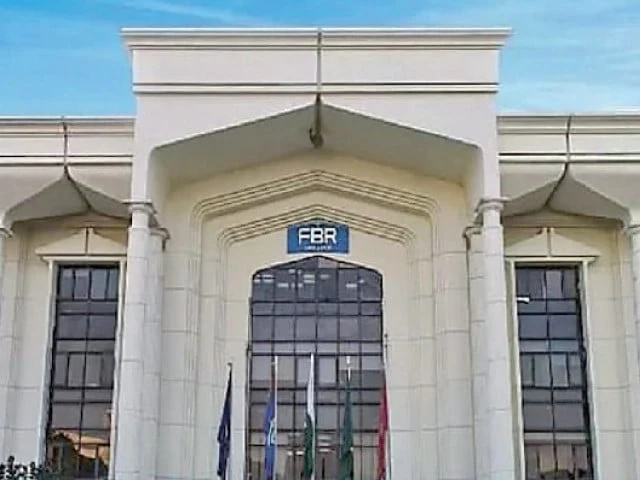
The government has approved another $200 million loan to support reforms at the Federal Board of Revenue (FBR), bringing the total amount of loans for tax system modernisation close to $5 billion.
The Central Development Working Party (CDWP) has recommended the Transforming and Digitalising Revenue Administration (TADRA) project, valued at Rs57.1 billion or $200 million, for approval according to the Ministry of Planning. The project has now been sent to the Executive Committee of the National Economic Council (ECNEC) for review. The funding will come from the Asian Development Bank (ADB) under a loan.
Of the project cost, $81 million—equal to Rs22.5 billion—has been set aside for consultancy services. The FBR will use these services to implement the project over five years. Another $10 million has been approved for project management expenses.
Successive governments have taken on loans to reform the FBR. The tax system has not delivered the expected results. The FBR failed to meet its tax targets in the two fiscal years. The tax-to-GDP ratio stayed flat at 10.3% in fiscal year 2025–26.
According to records, the Planning Commission noted that approximately $4.7 billion had already been obtained from development partners to modernise Pakistan’s tax system. With this loan, the total foreign funding for tax reforms will reach $4.9 billion.
The Planning Commission has asked the FBR to conduct an impact assessment of reform efforts funded by foreign loans. These include the Tax Administration and Reforms Project (TARP), Pakistan Single Window (PSW), Integrated Transit Trade Management Systems (ITTMS), Pakistan Raises Revenue Programme (PRRP), and now the TADRA project.
The loan will be repaid over 25 years with an interest rate between 1.5% and 2.0% per annum.
In response to the Planning Commission’s concerns, the FBR said that the PRRP programme only built ICT infrastructure. It explained that the TADRA project highlights why the PRRP-era data centres were insufficient. The FBR said the older data centres were designed for transaction processing and could not handle GPU-intensive machine learning tasks. This shows a need for upgraded systems.
The Planning Commission also said the project’s goals for tax collection and increasing the number of taxpayers were too general.
During the review process, Deputy Chairman of the Planning Commission Ahsan Iqbal stressed the need for measurable outcomes. He highlighted the importance of targets for revenue growth, improving the tax-to-GDP ratio and expanding the taxpayer base. The Ministry of Planning said this feedback was noted.
The FBR assured the CDWP that the new investment would raise the tax-to-GDP ratio to 13.5% by 2029 and bring people into the tax net. The CDWP recommended the project to ECNEC. Only after PIDE thoroughly reviewed its business model.
Similar promises were made under the $400 million World Bank-funded Pakistan Raises Revenue programme. Then the government promised to raise the tax-to-GDP ratio to 18% and later to over 13%. Neither the World Bank nor the government held the FBR accountable when these targets were missed.
Now the FBR has pledged to increase the number of registered taxpayers from seven million to 12 million and to boost the tax-to-GDP ratio from 10.3% to 13.5%.
The Planning Ministry said the main goal of the FBR project is to strengthen resource mobilisation. This will be done by accelerating the transformation of the revenue administration. The project aims to implement the FBR Transformation Plan (2024–28) with a focus on improving efficiency, increasing taxpayer compliance and raising Pakistan’s standing
An assistant economic advisor in the Finance Division suggested a feasibility study. This study would look at gaps and identify what specific needs the project must meet.
The meeting was told that loan negotiations will begin soon.
During the review, an assistant professor from the Cyber Security Department at the National University of Computer and Emerging Sciences said the project lacks a gap analysis. He added that there is no data security framework and no clarity on the artificial intelligence model to be used. He also pointed out that open-source solutions exist for building custom AI models and that proper data governance mechanisms are available.
Another assistant professor from the School of Electrical Engineering and Computer Science at the National University of Sciences and Technology raised concerns. He said the project should include an analysis of existing systems and clear details about the AI models it plans to use.
The FBR said its Transformation Plan (2024–2028) has been approved by the Federal Cabinet. The total cost of the plan is Rs350 billion. The projects and programmes under this plan are part of the transformation effort. This includes upgrading both hardware and software. According to the details, FBR servers will be upgraded from 850 TB to 3PB.