






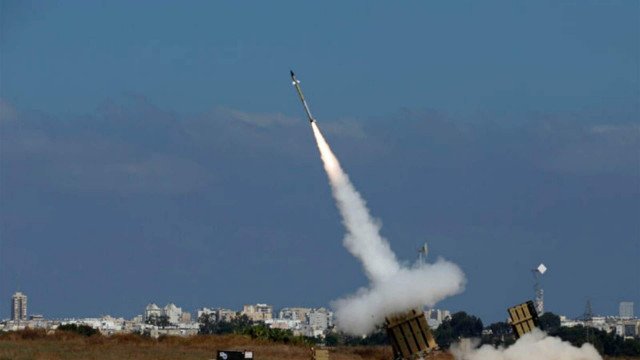
Around 40 people were killed or injured on Monday after Houthi ballistic missiles struck a military camp in Yemen’s eastern Shabwa province, according to a local official.
The deputy governor of Shabwa stated that approximately 40 people were killed or wounded when ballistic missiles hit Al-Alam camp in the Jardan district, Yemen Monitor reported. According to the official, the camp was being used to train newly recruited personnel before they joined the security forces.
Yemen Monitor also quoted local sources as saying that the initial casualty count stood at at least 40 people, although the exact number of fatalities and injuries had not been specified.
Meanwhile, a spokesperson for Yemen’s armed forces said the Houthis launched three ballistic missiles at Shabwa. The spokesperson stated that the missiles hit a training facility for security and police personnel and accused the group of intentionally killing Yemenis in different provinces across the country.
The Houthis had not issued an immediate response to the reported attack.
US Embassy Issues Safety Warning for Citizens Across the Middle East
The United States Embassy in Riyadh had earlier issued a security warning for American citizens across the Middle East “due to the complex security environment,” following Houthi attacks targeting civilian airports and other vital infrastructure.
The US Embassy in Riyadh advised American citizens to “be aware of potential flight cancellations, airspace closures, and travel disruptions.” It said Houthi attacks had caused civilian casualties and significant interruptions to travel, warning that “the hostilities have the potential to escalate rapidly beyond that immediate area.”
The embassy further advised that “Americans traveling to or from the Middle East should monitor information about airport and airline operations and develop contingency plans in advance,” adding that “Iran and groups supportive of Iran may target other US interests overseas or at locations associated with the United States and Americans throughout the world, including US businesses and other institutions.”
Separately, Egypt was reportedly prepared to offer Saudi Arabia the assistance required to protect its security and stability, the Egyptian presidency announced on Sunday. The development could increase tensions in the wider Middle East conflict as Iran-aligned Houthi forces in Yemen step up attacks against the kingdom.
Egyptian President Abdel Fattah al-Sisi called for an emergency parliamentary session to seek authorisation for the country’s military, one of the largest in the Arab world, to support Saudi Arabia in defending itself if Riyadh requested assistance.
A parliamentary vote was initially anticipated on Sunday. However, two lawmakers and reports in local media said deliberations were expected to carry on into Monday.
In recent weeks, clashes have intensified between the Saudi-led coalition, which supports Yemen’s internationally recognised government, and the Houthis, who hold control over the capital, Sanaa, and large parts of northern Yemen. The escalating conflict has emerged as another front in the war involving the United States, Israel and Iran.
If Egypt provides military assistance to Saudi Arabia, it could represent a significant expansion of the broader conflict with Iran. Since the United States and Israel launched attacks against the Islamic Republic in late February, the war has threatened global energy supplies and driven oil prices sharply higher.
Hours after the Egyptian parliament announced that discussions would continue, Foreign Minister Badr Abdelatty said in a post on X that he had spoken by telephone with Saudi Foreign Minister Prince Faisal bin Farhan. Their conversation focused on regional developments and the need to reduce tensions.
Houthis Intensify Attacks Against Saudi Arabia
In recent days, the Houthis have targeted Riyadh’s international airport and Saudi Aramco, the kingdom’s state-owned oil company, as clashes with Saudi-backed forces have resumed. The group’s territorial gains pose a threat to the strategically important Bab el-Mandeb shipping corridor, a key route for oil transportation, following the breakdown of a truce.
“Egypt will provide Saudi Arabia with all necessary and possible forms of support to defend its security and stability, protect its resources, territorial integrity and Islamic holy sites,” the Egyptian presidency said in an official statement. The announcement came after a meeting of Egypt’s National Defence Council, led by President Abdel Fattah al-Sisi and attended by the parliamentary speaker, prime minister and army chief.
Speaking on Saturday, Sisi said Egypt would follow the direction of Saudi King Salman and Crown Prince Mohammed bin Salman. The crown prince had visited Sisi on September 15, following the renewed outbreak of fighting in Yemen.
Should Egypt become directly involved in the conflict, it could come under attack from the Houthis. The group, made up of loosely organised mountain fighters, has developed into a formidable force numbering tens of thousands, with missiles and drones capable of threatening the wider region.
Throughout the conflict, Arab countries—particularly Gulf states that host American military bases—have repeatedly faced attacks from Iran and allied groups, including the Houthis and pro-Iranian militias operating in Iraq.
In July, a drone attack targeted Egypt’s Mediterranean port of Damietta, although no group claimed responsibility. Egyptian authorities have not identified any party as responsible but said they were taking the necessary steps to safeguard the country’s national security.
Egypt and Saudi Arabia maintain strong strategic and economic ties. Following the military removal of Islamist President Mohamed Morsi in 2013, Saudi Arabia and other wealthy Gulf nations, including the United Arab Emirates, provided Egypt with billions of dollars through financial assistance, central-bank deposits and investments. Abdel Fattah al-Sisi assumed the presidency the following year.
In 2015, Egypt joined the Saudi-led coalition that intervened in Yemen to support the internationally recognised government against the Houthis. However, Egypt’s direct military involvement in the civil war remained limited.
After seeking assistance from US President Donald Trump to confront the Houthis, Riyadh has increasingly relied on regional partners and Pakistan. According to sources who spoke to Reuters last month, Trump declined to authorise US strikes against the group. Instead, Washington offered support through intelligence-sharing and assistance with targeting.
On Sunday, Saudi Defence Minister Prince Khalid bin Salman travelled to Abu Dhabi, where he met UAE President Mohammed bin Zayed Al Nahyan. The Emirati state news agency reported that their discussions centred on regional security issues.
The meeting came after UAE Vice President Sheikh Mansour bin Zayed Al Nahyan visited Riyadh last month. His trip marked the first visit by a senior Emirati official to Saudi Arabia since a major dispute between the two Gulf powers emerged last year.





