






Bill Gates, the co‑founder of Microsoft, says that new rules are needed to protect workers as artificial intelligence speeds up changes in how people work.
In an essay, Bill Gates suggests that a special group of jobs is called “Human Reserved.” These jobs would only be done by people even if AI or robots could do them as well.
Bill Gates compares this idea to protecting land. He argues that some jobs should be kept for humans even if automation could do them efficiently.
What are ‘Human Reserved’ jobs?
Bill Gates said governments could decide which jobs should stay for humans based on their workforce needs and the people living in their country.
For example, a country with older people might choose to keep caregiving jobs for humans while a country that needs more workers could decide robots should do those jobs.
This idea would mean governments get to decide which kinds of work are important enough to keep from machines.
Gates warns AI may put millions of jobs at risk
It seems that Gates also warned that advances in AI could put entry-level and mid-level jobs at risk.
It seems that he identified areas such as customer service, sales, and software engineering as professions that could face disruption as AI becomes more capable.
It seems that physical jobs could also eventually be affected as robots become cheaper and more sophisticated, he said, putting occupations such as construction at risk.
Why is Gates concerned about young workers?
Gates says he is especially worried about people entering the workforce if companies increasingly depend on AI and automation.
A drop in entry‑level positions could make it harder for young people to gain their professional experience and build careers.
However, Gates argues that the government still has an opportunity to prepare for the changes if it acts before large‑scale job displacement occurs.
How would a ‘robot tax’ work?
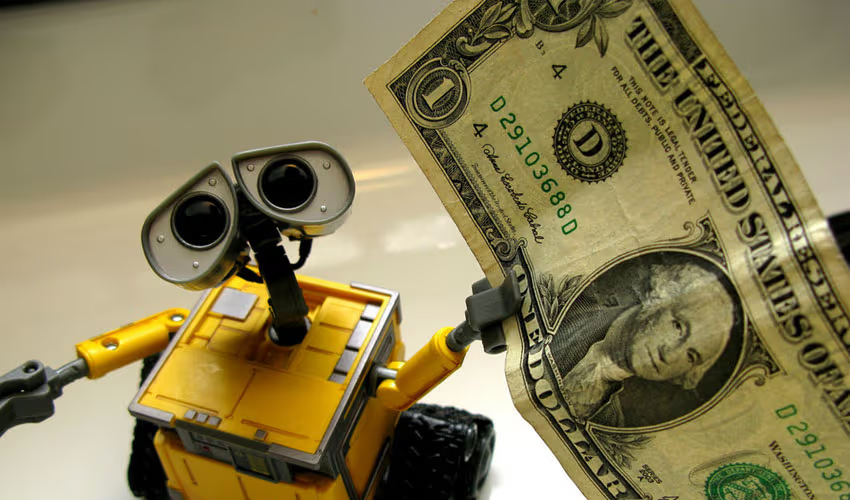
In a proposal, Gates suggested that companies that replace workers with AI or automated systems should pay a “robot tax.”
The money raised by the robot tax could be used to retrain workers whose jobs were affected by automation. It could also give support to people who are moving into careers.
Gates urged policymakers to begin addressing the impact of AI on employment right now. Waiting until widespread job losses become an economic and social problem would be too late.





