






Today, India is counted among the world’s major economies. But there was a time when India had come dangerously close to defaulting on its international payments and facing economic bankruptcy.
At the end of 1990 and the beginning of 1991, India was facing a severe Balance of Payments Crisis. Foreign exchange reserves had fallen to dangerously low levels, and the country had only a few weeks’ worth of foreign exchange left even for essential imports. The confidence of international lenders had been shaken, repayment of external debt had become a serious problem, and it was becoming increasingly difficult for India to obtain even short-term financial assistance from abroad.
There were several factors behind this crisis. The growing fiscal deficits of the 1980s, dependence on borrowing, weak exports, and an economy burdened by strict government controls were already creating problems. Then the 1990 Gulf War caused oil prices to rise, further increasing India’s import bill. Remittances from the Middle East were also affected, while political instability within the country made the situation even worse.

During this critical period, Chandrashekhar was India’s Prime Minister, while Yashwant Sinha was the Finance Minister. Around the same time, S. Venkitaramanan took charge as the Governor of the Reserve Bank of India on December 22, 1990. According to RBI records themselves, during his tenure the country was facing severe external-sector problems, and his administrative abilities helped India navigate the Balance of Payments Crisis. It was also during this period that the IMF’s Stabilisation Programme, along with the devaluation of the rupee and the process of economic reforms, began.
The crisis became so severe that India had to pledge its gold reserves in order to obtain external financial assistance. For a country where gold is not merely wealth but also a national and emotional symbol, this was an extremely sensitive and painful decision. But the circumstances could not be handled with ordinary decisions.
Later, P. V. Narasimha Rao became Prime Minister, and Dr. Manmohan Singh, as Finance Minister, introduced the sweeping economic reforms from July 1991 onward that changed the direction of the Indian economy. The devaluation of the rupee, relaxation of industrial licensing, opening up of trade, changes in investment policies and the gradual liberalisation of the economy were all part of this major historical turning point.
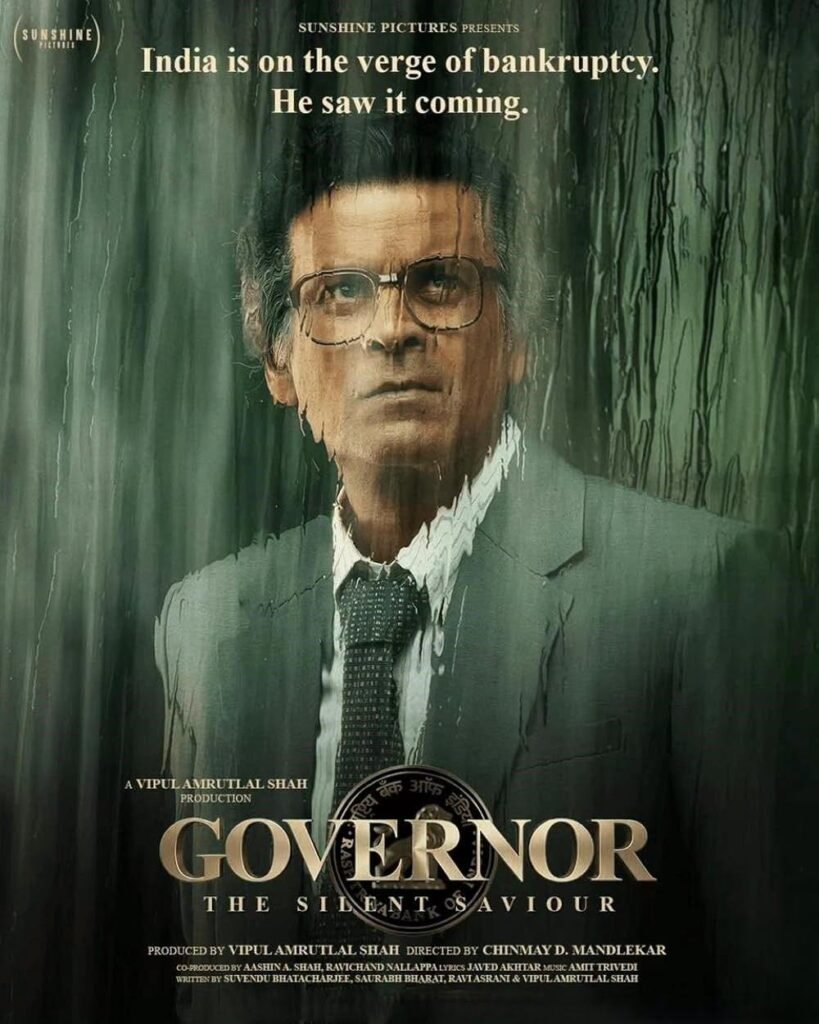
It is against this historical backdrop that Amazon Prime’s film “Governor” has been made.
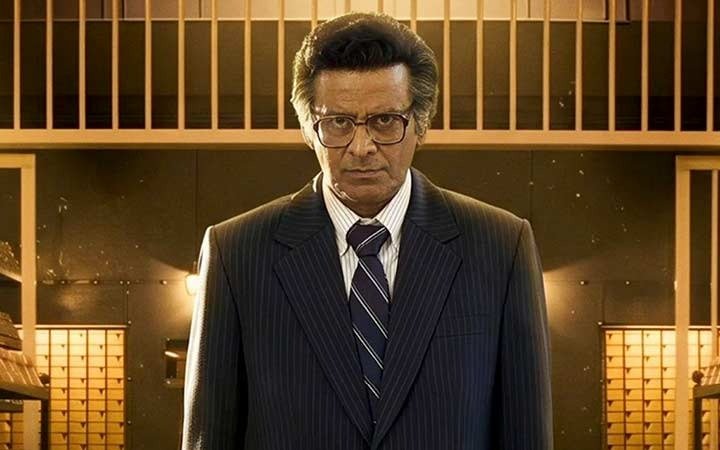
In the film, Manoj Bajpayee plays the role of RBI Governor A. Ramanan, a character inspired by the real-life figure S. Venkitaramanan. However, the film presents the character in a dramatic and fictionalised manner, so it should be viewed not as a complete historical document but as a cinematic story inspired by real events.
The film’s greatest strength is that it shows that wars are not fought only on battlefields but also inside offices, through files, banks, financial decisions and behind closed doors. There is no gun-wielding hero here, but rather a government official whose single decision could determine the economic future of an entire country.
Manoj Bajpayee does not turn this character into a conventional cinematic hero. Instead, he portrays him as a calm, pressure-resistant bureaucrat carrying the enormous weight of responsibility on his shoulders. Ada Sharma, Naushad Mohammad Kunju and Madhu, along with the other performers, also support the story. The film is directed by Chinmay Mandlekar.
An important point is that the film has also been criticised for attempting to portray an extremely complex national economic crisis as the achievement of a single individual presented as the “sole saviour,” whereas in reality, the crisis and the process of overcoming it were the result of the combined efforts of several political leaders, government officials, the RBI team and the economic policies of the government that followed. Some critics have also questioned the film’s political and historical perspective.
In my view, the real importance of “Governor” is that it reminds us that the history of a country is not shaped only by wars and political revolutions. Sometimes, the fate of an entire nation is decided not on a battlefield but around a table, through extremely difficult decisions made by a handful of people.
If you enjoy films based on political, historical and economic crises, “Governor” is definitely worth watching. It is a successful attempt to make an important historical period accessible to an ordinary viewer. Although, rather than treating it as a complete and impartial historical account, it is more appropriate to view it as a Cinematic Interpretation inspired by real events.
This is not merely the story of a central bank governor. It is the story of a moment when an entire country stood on the brink of economic bankruptcy, and every decision had the potential to change history.
The film also makes you realise how nations manage to recover after falling to their knees.
In 2022, Pakistan also faced similar circumstances, but through the efforts of the government and by the grace of God, we managed to emerge from that crisis. At the time, the Indian media mocked us for “begging” before the IMF. But this film reminds them of their own past, when despite being part of the Soviet-aligned bloc, India was forced to bow before the United States and the IMF, and the situation eventually reached the point where India had to pledge its gold in Switzerland and Britain.





